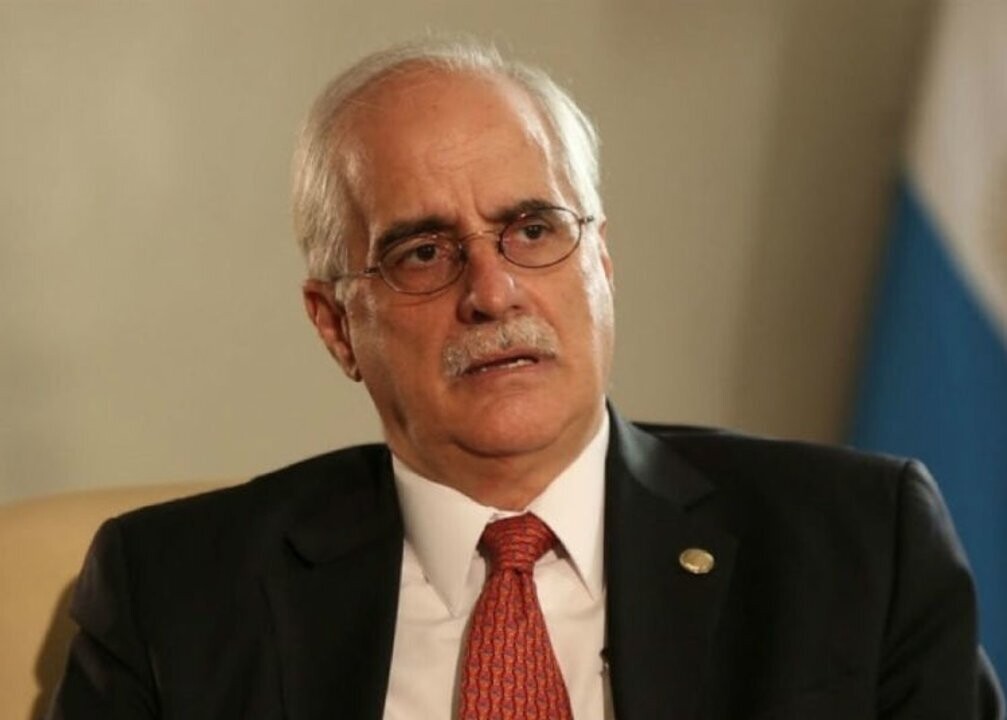
National deputy from Unión por la Patria, Jorge Taiana, presented a resolution project today that includes a request for information from the Executive Branch to specify what preventive measures it is adopting to contain the price of oil for domestic consumption. The initiative of the former foreign minister responds to the surge in the international value of the barrel amid the escalation of the armed conflict in the Middle East and the blockade of the Strait of Hormuz, which has reduced oil exports from the Persian Gulf by 60%. In the project, the opposition lawmaker asked if the Government has foreseen the implementation of stabilization mechanisms or precautionary measures that allow avoiding the direct transfer of international price volatility to the local hydrocarbon market. Likewise, he warned about the modifications introduced by the Ley Bases to the current regulations, which eliminate the priority of domestic supply at values compatible with the national economy, prioritizing export parity. The Peronist deputy also alerted about the imminent arrival of winter and the consequent increase in energy demand, so he requested details on the contingency plan to guarantee the supply of fuels and electricity throughout the country. Finally, according to the Argentine News Agency, Taiana requested that the Ministry of Economy inform what measures will be implemented to mitigate the impact of the rise in oil prices. In particular, he asked to know what alternative instruments will be used to prevent the increase in logistics and transportation costs from being passed on to the consumer price index. In the project's justification, Taiana emphasized that the request for information to the Executive Branch is based on “the need to transparentize the official strategy to mitigate the impact of this geopolitical crisis on the economic stability and the security of the nation's natural resources”. He stressed that “the international scenario is going through a moment of extreme energy volatility derived from the escalation of the armed conflict in the Middle East”. “The confrontation involving key actors such as the United States, Israel, and Iran has caused the price of a barrel of oil to reach critical levels, exceeding 120 dollars,” he pointed out. And he added that “this situation is aggravated by the latent threat to the Strait of Hormuz, a vital passage point through which a large part of the world's crude supply circulates”. “The closure or disruption of this maritime route not only drives up global operational costs but also places importing and exporting nations in a state of unprecedented logistical vulnerability in the last decade,” he continued. The former minister of the governments of Néstor Kirchner, Cristina Kirchner, and Alberto Fernández stated that although Argentina has one of the most important non-conventional hydrocarbon reserves in the world in the Vaca Muerta formation, the changes made by the Ley Bases in central articles of Law 17.319 of Hydrocarbons caused “the national State to decline critical faculties to intervene in the setting of domestic prices”. “This deregulation has dismantled the tools that would allow establishing mechanisms to cushion the cost of internal energy from the swings of a global market at war,” he noted. “The central concern of this request for information lies in the impact that the increase in the price of hydrocarbons has on economic activity and on the pocket of Argentines,” insisted Taiana. In this regard, he stated that “without the prerogative of YPF to act as a de facto regulator in the fuel market, the transfer of the rise in international prices is immediate and devastating for the cost structure of the national economy”. In this sense, he expressed that “it is imperative that the National Executive Branch inform what precautionary measures or contingency plans it has planned to prevent a worsening of the country's socioeconomic reality, especially in the face of the imminence of winter and the seasonal increase in energy demand”.